Two-Dimensional Machiavellianism Scale
TDMSA 12-item balanced instrument measuring Machiavellianism across two robust, distinct dimensions: cynical worldviews and immoral interpersonal tactics.
Overview
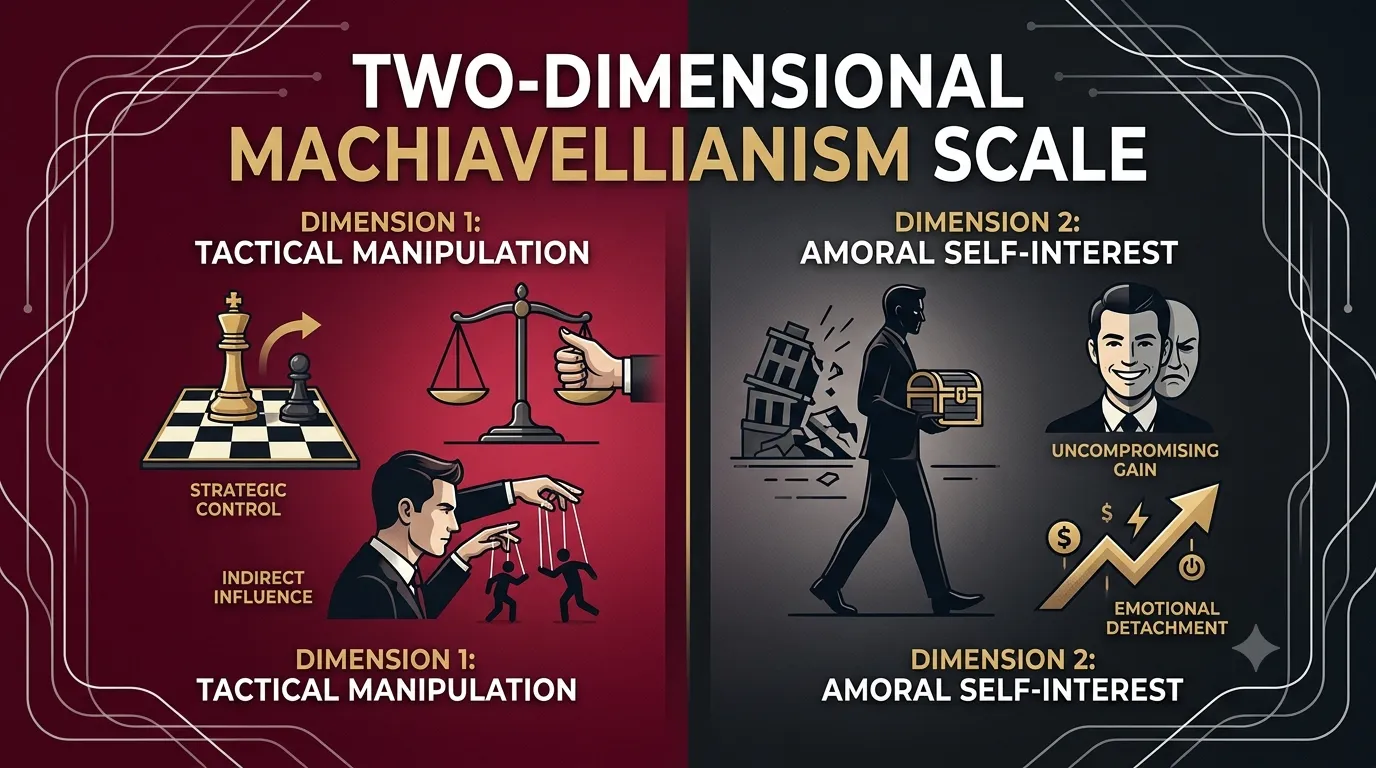
The Two-Dimensional Machiavellianism Scale (TDMS) addresses long-standing psychometric limitations of traditional instruments like the Mach-IV. Grounded in a robust two-dimensional model, it separates the affective-cognitive foundation (Views) from the strategic, behavioral component (Tactics).
- Views: Captures a pessimistic, cynical view of human nature as inherently untrustworthy, weak, and duplicitous. This perspective serves as a cognitive justification or shield, mitigating guilt when manipulating others.
- Tactics: Reflects a calculated, goal-oriented willingness to use traditionally amoral, duplicitous, or pragmatic “ends justify the means” methods to attain specific objectives.
Importantly, the scale features an equal balance of protrait and contrait (reverse-scored) items to rigorously control for acquiescence response bias.
Items
Please indicate how much you agree or disagree with the following statements over the past year using the 7-point response scale.
Views Subscale
- Item 1: In my opinion, human nature is to be dishonest.
- Item 2: I think that most people will take advantage of others in the right situation.
- Item 3: When people do something nice for me they really have another agenda.
- Item 4: I feel that deep down people trust each other. (Reverse-scored)
- Item 5: I think people would rather help each other than act selfishly. (Reverse-scored)
- Item 6: I believe that most people are essentially good. (Reverse-scored)
Tactics Subscale
- Item 7: I think that it is OK to be unethical for the greater good.
- Item 8: I think that it is OK to take advantage of others to achieve an important goal.
- Item 9: It is sometimes necessary for me to mislead others to get things done.
- Item 10: I value being honest over getting ahead. (Reverse-scored)
- Item 11: To me, it is never justified to deceive others. (Reverse-scored)
- Item 12: To me, something is not worth doing if it requires being unethical. (Reverse-scored)
Scoring
- Reverse Code the items containing a contrait valence: Items 4, 5, 6, 10, 11, and 12. The recoded value equals 8 minus the original value.
- Subscale Scores: Calculate the mean or sum of the designated items for each dimension:
- Views: Mean/Sum of Items 1, 2, 3, 4, 5, and 6.
- Tactics: Mean/Sum of Items 7, 8, 9, 10, 11, and 12.
- Total Score: Calculate the mean or sum across all 12 items.
Interpretation
Scores range from 1 to 7 when calculated as a scale mean.
- High Views: Indicates high levels of generalized misanthropy, hypervigilance toward interpersonal threat, lower subjective well-being, and alignment with vulnerable/rivalry narcissistic patterns.
- High Tactics: Reflects an instrumental, deliberative approach to social interactions, low conscientiousness, utilitarian moral reasoning, and higher alignment with the callous/antagonistic core of psychopathy without the associated disinhibition or fearlessness.
Citation
Monaghan, C., Bizumic, B., Williams, T., & Sellbom, M. (2020). Two-dimensional Machiavellianism: Conceptualization, theory, and measurement of the views and tactics dimensions. Psychological Assessment, 32(3), 277–293. http://dx.doi.org/10.1037/pas0000784
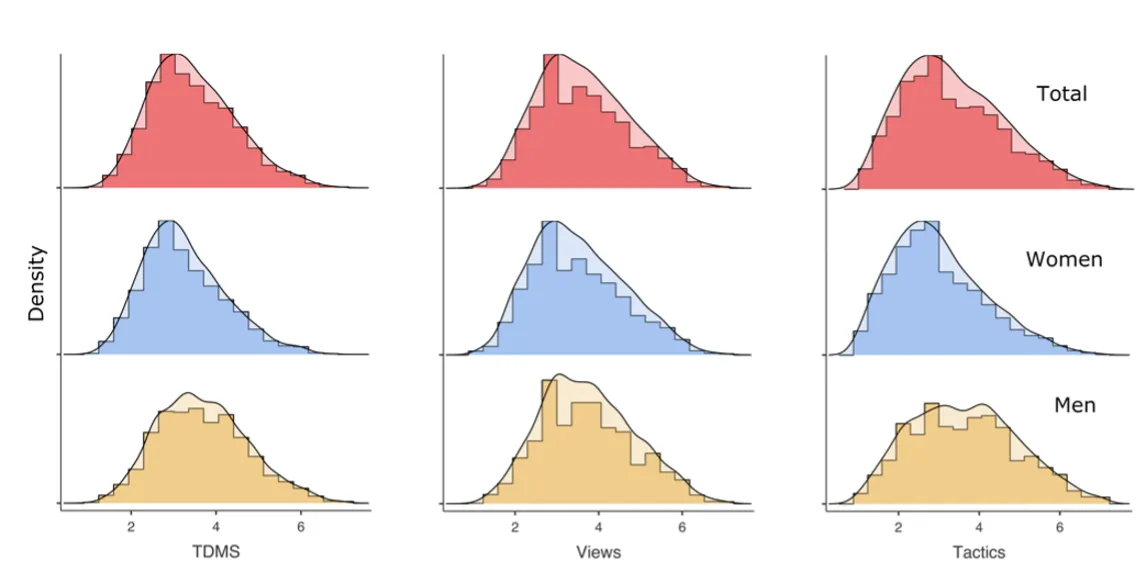
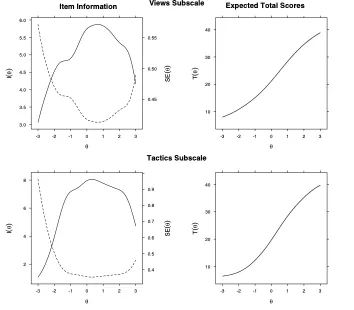
Supporting figures